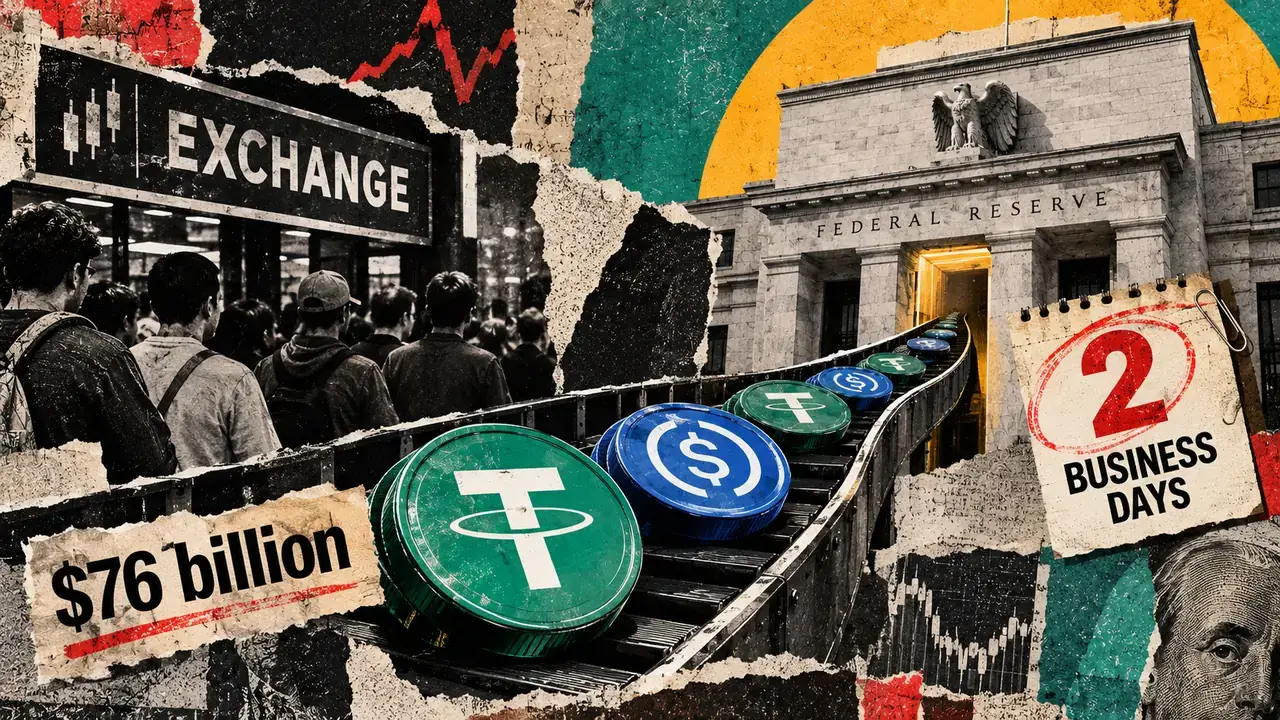

Bitcoin’s slides to $70,000 triggering structural crisis that could make FTX collapse look like child’s play

Bitcoin’s latest drawdown is forcing a critical stress test on the “treasury company†trade.
Over the past months, the model appeared simple, requiring companies to sell stock or low-cost convertible notes, buy Bitcoin, and rely on rising prices and a persistent equity premium to cover the remainder.
However, with Bitcoin sliding towards $70,000, which is significantly lower than the cost basis for most corporate holders, the mechanics of that trade are facing a potential reversal.

On Feb. 2, Michael Burry, the investor made famous by The Big Short, issued a warning about this situation. He described a reflexive unwind in which falling Bitcoin prices compress equity premiums, close the issuance window, and turn a strategy of “accumulate forever†into “sell to survive.â€
The concern is not merely about price action but about structural leverage. Treasury firms have quietly become a leveraged expression of Bitcoin’s price and the market’s willingness to fund them. When either component breaks, the entire strategy can wobble.

Strategy’s average price becomes psychological barrier
Strategy (formerly known as MicroStrategy) remains the bellwether for the trade because it industrialized the playbook.
In a recent SEC filing, the company reported 713,502 Bitcoin held at an average purchase price of $76,052 per coin, for an aggregate purchase price of $54.26 billion.
That average price acts as a psychological marker, even if accounting rules and long-term conviction mean the company isn’t required to sell near cost. Still, when Bitcoin sits below that range, the market begins to ask uncomfortable questions about whether the company can continue buying at scale and at what cost.
Burry’s scenario map suggests that specific price levels could trigger escalating consequences. He argues that Bitcoin's drop below $70,000 is sufficient to push Strategy into multi-billion-dollar unrealized losses and leave capital markets “essentially closed.â€
At $60,000, he describes an “existential crisis,†which could impact other treasury firms. If the top crypto further declines to $50,000, he expects miner bankruptcies and forced selling to accelerate the downside.
The math quickly turns into a narrative problem. With 713,502 Bitcoin, a drop from Strategy’s average cost of $76,052 to $70,000 implies roughly $4.3 billion in unrealized losses.
This aligns with Burry’s “multi-billion†framing. At $60,000, the gap rises to about $11.5 billion, and at $50,000, it expands to around $18.6 billion.
Notably, these numbers do not automatically trigger liquidation, nor does it mean the Michael Saylor-led firm would sell its holdings.
However, they can change how investors value the equity and, crucially, whether the company can continue issuing stock, preferreds, or converts on acceptable terms.
Nonetheless, history provides some data on how the firms behave in downturns. Blockchain analysis platform Lookonchain reported Strategy's BTC holdings were in the red for over 500 days during the 2022–2023 bear market.
At the time, the company sold 704 Bitcoin on Dec. 22, 2022, and promptly repurchased 810 coins afterward. Aside from that instance, they have been strictly buy-and-hold.

Metaplanet illustrates the volatility risks
Meanwhile, Japan’s Metaplanet offers a further vivid illustration of the inherent vulnerability within Bitcoin treasuries.
Since 2024, the company has positioned itself as a Bitcoin treasury play, with a goal of acquiring 210,000 BTC by 2027.
However, its analytics dashboard shows that its current holdings of 35,102 BTC have already incurred nearly $1 billion in unrealized losses, alongside roughly $355 million in outstanding debt.
The optics matter because a number that large raises the cost of refinancing and makes new issuance more punitive.
Treasury firms can tolerate paper losses if they have time and cheap access to capital. Once investors start pricing in tighter financing conditions, the equity becomes less a “BTC-per-share growth story†and more a stressed wrapper around a volatile asset.
This is where a “death spiral†begins to look less like doom-saying and more like a structural risk.
When a company trades at or near the value of its Bitcoin, or at a discount, issuing equity becomes accretive on a per-share basis. The market senses the slowdown, and the multiples can compress further.
That is the reflexive loop Burry highlights: price drops lead to lower premiums, which narrows the funding window, resulting in fewer purchases, a weaker narrative, and further price declines.
Notably, debt and preferred financing can fill the gap, but only at a steep price.
Strategy’s recent filing also disclosed a dividend-rate increase on one of its preferred instruments (STRC) to 11.25%. This serves as a reminder that the cost of carry can rise quickly when risk appetite fades.

Will the bubble in Bitcoin treasury companies burst?
The structural risks have drawn comparisons to historical financial bubbles, sparking a fierce debate among analysts.
Charles Edwards, the founder of Capriole, said the “DAT model†(Digital Asset Treasury) is a leverage explosion waiting to happen. He noted that there are currently 200 Bitcoin treasuries, comparing them to the investment trusts of 1929.
According to him:
“By the end of 1929 there were around 600 investment trusts. The trusts caused the 1930 crash. The trusts are the same as DATs, the only difference is instead of buying stocks, DATs buy Bitcoin.â€

Edwards argued that there is no sustainable business model for generating yield on a fixed-supply asset, thereby incentivizing leverage when market net asset values collapse.
He noted that Bitcoin treasuries hold 12% of all Bitcoin and predicted an unwind that would make the collapses of Luna and FTX look like “child's play.â€
However, Bitcoin analyst Adam Livingston pushed back against this comparison, calling it a “category error stacked on a historical analogy stacked on a vibes-based panic attack.â€
Livingston argued that 1920s trusts were circular-leverage machines in which trusts owned other trusts, balance sheets were opaque, and margin debt was rampant. He noted that when prices fell in 1929, forced liquidations cascaded instantly.
He said:
“Bitcoin treasury companies are… not that. They hold a single, fully auditable bearer asset. No rehypothecation chains. No hidden cross-ownership.â€
Livingston emphasized that public filings, public wallets, and mark-to-market accounting provide transparency.
He argued that yield does not require inflation in the underlying asset but rather access to capital markets and time arbitrage. He also disputed the idea that equity dilution constitutes leverage or that convertibles act as reflexive margin calls.
Livingston concluded:
“There is no automatic liquidation engine like Luna or FTX. Bitcoin does not vanish when price goes down.â€
What's next for Bitcoin treasury companies?
Bitcoin’s behavior in risk-off moments has increasingly resembled that of a high-beta liquidity instrument, sensitive to the same forces that move growth stocks and speculative credit.
In periods of broader market stress, correlations increase, margins tighten, and selling becomes forced rather than voluntary.
This matters because the treasury-firm model is explicitly built on the opposite environment: abundant liquidity, willing buyers of equity paper, and confidence that the rally will outrun dilution and financing costs.
In a world where investors demand higher yields and volatility makes convertibles more expensive, the model does not necessarily collapse overnight, but it stops compounding.
In light of this, market observers are outlining three forward scenarios to frame the next quarter.
The first is stabilization and re-opening. In this scenario, Bitcoin recovers toward or above key cost-basis levels, volatility declines, and treasury firms regain a premium over net asset value (NAV).
In this case, the DATs can resume equity issuance, enabling renewed accumulation and the trade to re-lever.
Meanwhile, the second situation is a grinding drawdown in which Bitcoin price drifts lower without capitulation.
Here, the BTC treasury companies' premium compresses toward 1x NAV, issuance becomes uneconomic, and firms pivot from aggressive buying to balance-sheet defense.
This leaves the shareholders bearing the brunt of Bitcoin's underperformance, while management focuses on managing financing costs.
The third situation is Burry’s cascade risk. If Bitcoin falls far enough to trigger miner distress and broader forced selling, capital markets can tighten abruptly.
Treasury firms with debt and preferred obligations face a harsher reality in which raising capital becomes very expensive, and the temptation to preserve solvency can begin to outweigh the commitment never to sell.
The post Bitcoin’s slides to $70,000 triggering structural crisis that could make FTX collapse look like child’s play appeared first on CryptoSlate.