
If the CFTC “only does Bitcoin,†why did it just invite crypto’s biggest CEOs into the room?

CFTC Chair forms a new Innovation Advisory Committee packed with crypto, exchange, and prediction-market CEOs
Most crypto traders barely think about the Commodity Futures Trading Commission until something breaks, a lawsuit hits, or a Bitcoin futures headline crosses their feed.
In the popular mental map of US regulation, the SEC is the one staring at tokens, and the CFTC is the one that shows up around Bitcoin, usually around futures.
Then the CFTC went and did something that does not fit that simple story.
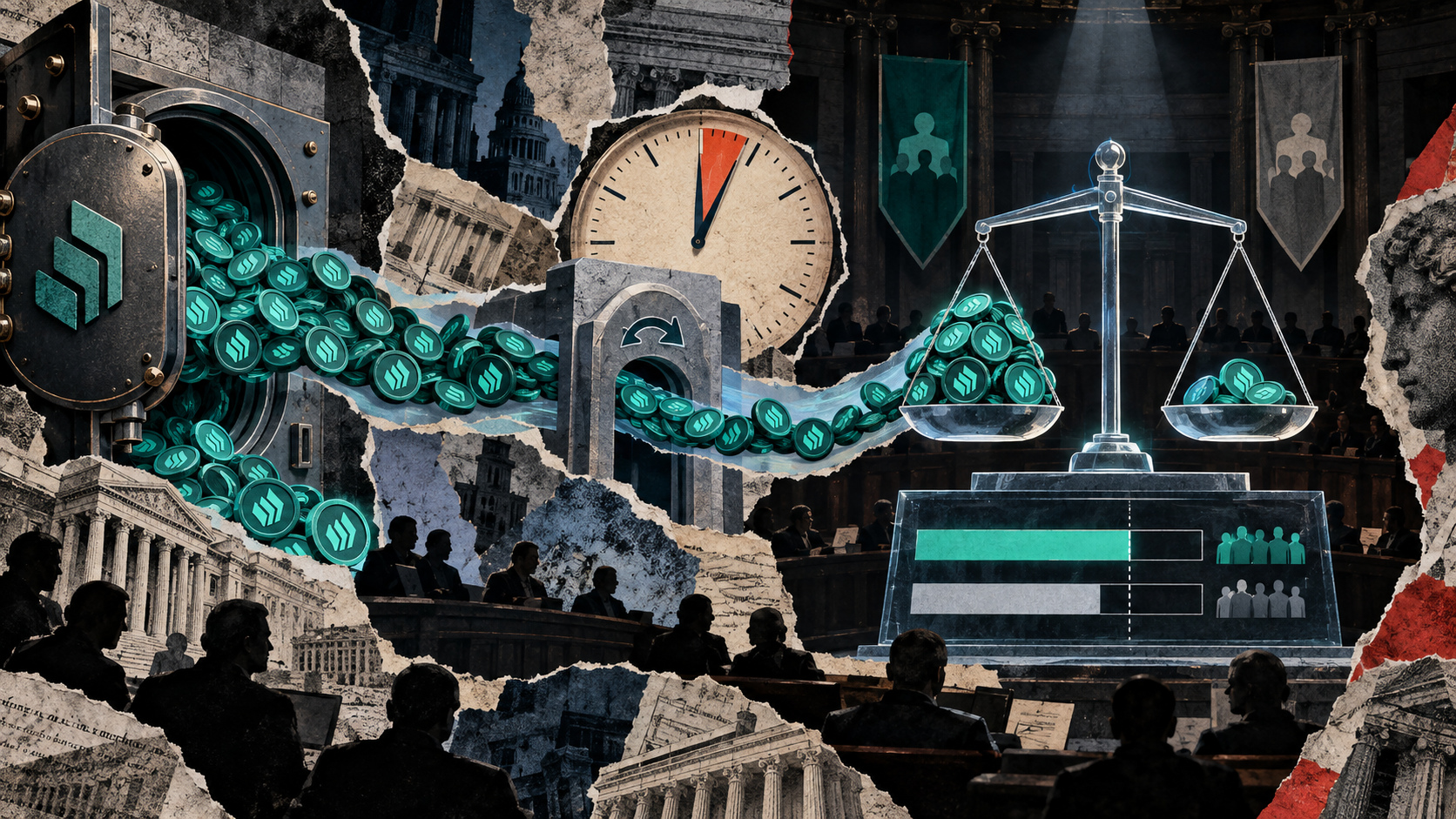
On Feb. 12, the agency announced a fresh slate of members for its Innovation Advisory Committee, a 35-person group that reads like a who’s who of crypto, Wall Street market plumbing, and the new world of prediction markets.
The names jump out right away: Brian Armstrong from Coinbase, Vlad Tenev from Robinhood, Shayne Coplan from Polymarket, plus Uniswap’s Hayden Adams, Ripple’s Brad Garlinghouse, Solana Labs’ Anatoly Yakovenko, Chainlink’s Sergey Nazarov, and Kraken co CEO Arjun Sethi, all listed in the same federal announcement.
It goes further. The committee also includes leaders from the core machinery of American markets, Nasdaq, CME Group, Intercontinental Exchange, DTCC, Options Clearing Corporation, and ISDA.
So the real question is not “why are crypto CEOs advising Washington,†because that part has been happening in different forms for years. The question is why the CFTC is building a table this big, this broad, and this crypto-heavy, at a moment when a lot of people still treat the agency like it lives in the Bitcoin corner of the room.
The answer starts with the CFTC’s job as the referee for derivatives markets, then it spills into something bigger, a fight over prediction markets, and a push in Congress that could hand the CFTC a larger slice of crypto oversight than most people expect.

A committee that looks like a map of where money is going next
The CFTC’s own language around the committee is about modernization and future proofing, under new chair Michael Selig. The membership list tells the rest of the story.
When you put Coinbase and Robinhood next to CME and Nasdaq, you get a picture of crypto’s next phase that has less to do with memes and more to do with infrastructure.
Clearing, custody, collateral, surveillance, contract design, market integrity, and the boring rules that decide whether a product survives.
That is the part most retail traders never see, until a platform freezes, a product gets pulled, or a regulator drops a memo that changes how a trade is treated. The IAC is stacked with the people who build those pipes, crypto pipes and traditional ones.
It also includes the CEOs of Kalshi and Polymarket, and it includes FanDuel and DraftKings leadership in the same lineup. You can call that a curiosity, or you can call it the CFTC quietly saying, “event contracts are part of the future market structure conversation.â€
That matters because prediction markets have gone from niche internet obsession to something mainstream readers are running into during sports, politics, and pop culture, and major outlets are already tracking the confusion this creates for the public and for regulators.
Why the CFTC wants crypto chiefs in the room
There are two timelines converging here, and both push the CFTC toward crypto, even if your mental model starts and ends with Bitcoin.
First, Congress is actively debating whether the CFTC should get broader authority over “digital commodities.†The Senate Agriculture Committee said it advanced the Digital Commodity Intermediaries Act, describing it as a step toward new CFTC authority to regulate digital commodities and strengthen consumer protections. If that direction sticks, the agency’s “crypto job†expands from a high profile corner of the market to a much bigger section of the map.
Second, the CFTC has been signaling a more active posture on how new tech fits into market rules. In a recent CFTC and SEC staff joint statement, the agencies emphasized coordination around spot commodity products and venue flexibility, part of a broader push to modernize how these markets are handled.
Now add a practical reality. Rules are written by people, and those people need to understand how products behave under stress, how liquidity forms, where manipulation shows up, and what parts of a system fail first.
An advisory committee packed with CEOs is one way to compress that learning curve. Bloomberg Law framed this as the new chair deepening reliance on crypto, prediction market, and exchange executives via a panel of big names advisers.
You can debate whether that is healthy, risky, or simply inevitable. You can also treat it as a signal. The CFTC is preparing for a world where crypto products look more like mainstream market products, and mainstream market products start absorbing crypto mechanics, tokenized collateral, 24 7 trading expectations, and programmable settlement.
Prediction markets are forcing the issue
If you want the shortest path to understanding why Polymarket and Kalshi are in this committee, follow the money and follow the jurisdiction fight.
Prediction markets have been posting eye popping volume moments. The Block maintains a monthly dataset comparing Polymarket and Kalshi volumes, giving a clean KPI for how quickly this category is scaling.
The surge has also become cultural. The Guardian reported that Kalshi hit a $1 billion daily volume milestone during the Super Bowl, and described how these platforms have pulled attention from people who never thought they were “trading†anything.
At the same time, the legal and regulatory perimeter is still being contested. The CFTC chair has publicly talked about drafting new rules for event contracts, and a broader push for clarity as prediction markets expand rules.
A Sidley analysis of the “Project Crypto†summit described Selig laying out a four part agenda to support the responsible development of event contract markets.
That puts the CFTC in an unusual position. Event contracts sit at the intersection of derivatives regulation, consumer protection, and the politics of gambling enforcement. When a product category grows this fast, the regulator either shapes it or spends years chasing it.
Adding the biggest operators to an innovation committee is a clear sign that the CFTC wants to shape it, and it wants to do it with the people who already have the users.

So why does this matter to Bitcoin people?
Because the “CFTC equals Bitcoin†shortcut misses what the agency actually touches, and it misses what the market is turning into.
Bitcoin is the gateway drug for mainstream derivatives in crypto, and it has been the cleanest institutional on ramp for years. That creates a perception that the CFTC’s crypto universe begins and ends there.
Yet the IAC membership list includes DeFi rails, centralized exchanges, stablecoin and custody infrastructure, plus the clearing and exchange giants that move trillions in traditional markets.
Put that together with the Senate’s market structure work, and you get a forward-looking picture, a regulator that may be gearing up for a broader mandate, a market that keeps inventing products faster than rulebooks update, and a new class of “trading†that looks like gambling to some people and looks like price discovery to others.
There is also a credibility problem lurking in the background. Barron’s has reported on staffing declines inside CFTC enforcement, even as crypto and prediction markets grow, raising questions about whether the agency can keep up with the pace of innovation and the risk of fraud.
That dynamic makes advisory committees feel even more consequential, because a regulator short on resources has to choose where it spends attention.
The people building crypto’s biggest companies have spent years arguing they want clearer rules. Now they are being invited into a room where some of those rules may start taking shape, alongside the CEOs who run the exchange and clearing systems Wall Street already trusts.
If you only watch Bitcoin price candles, this looks like a random roster announcement.
If you watch where US market structure is moving, it looks like a preview of the next regulatory era, one where crypto stops being treated like a side quest and starts being treated like a design problem inside the core financial system.
The post If the CFTC “only does Bitcoin,†why did it just invite crypto’s biggest CEOs into the room? appeared first on CryptoSlate.