
Bitcoin’s oil risk stretches into 2027 as IEA cuts supply outlook again
The International Energy Agency has cut its 2026 oil supply forecast and now expects full Gulf supply recovery in 2027, complicating the prospect of energy-driven relief in borrowing costs for Bitcoin investors.
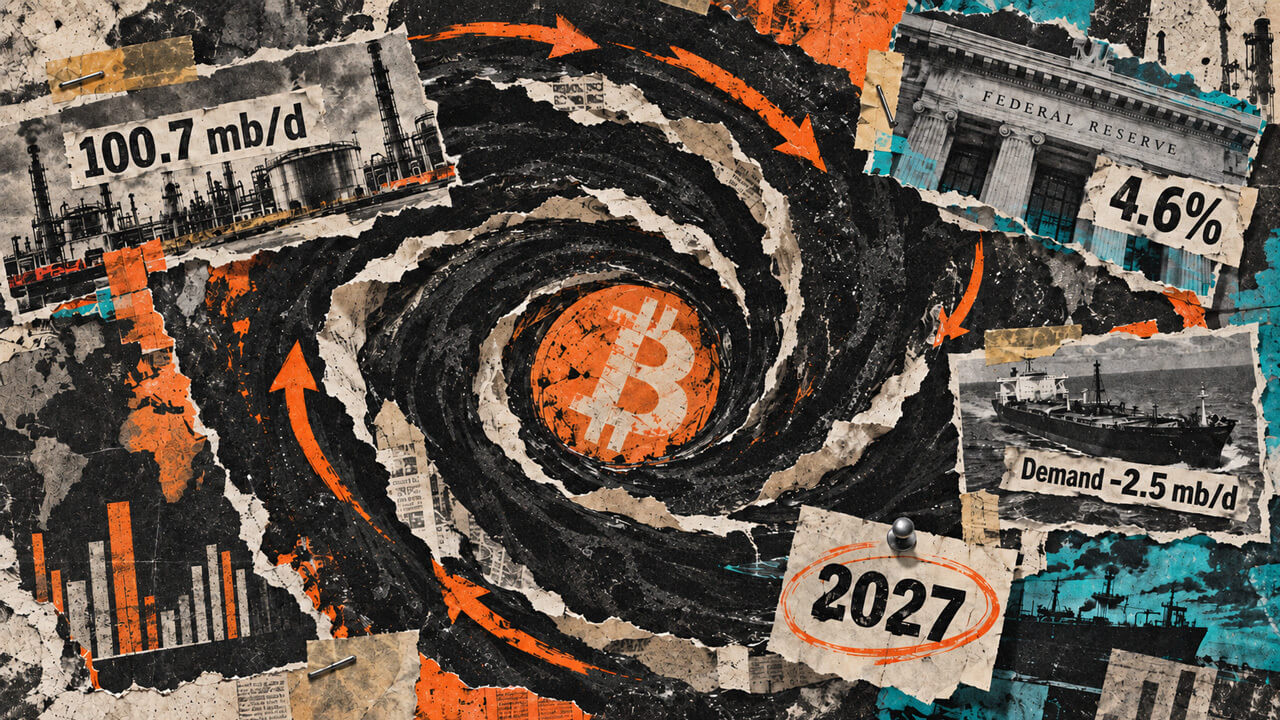
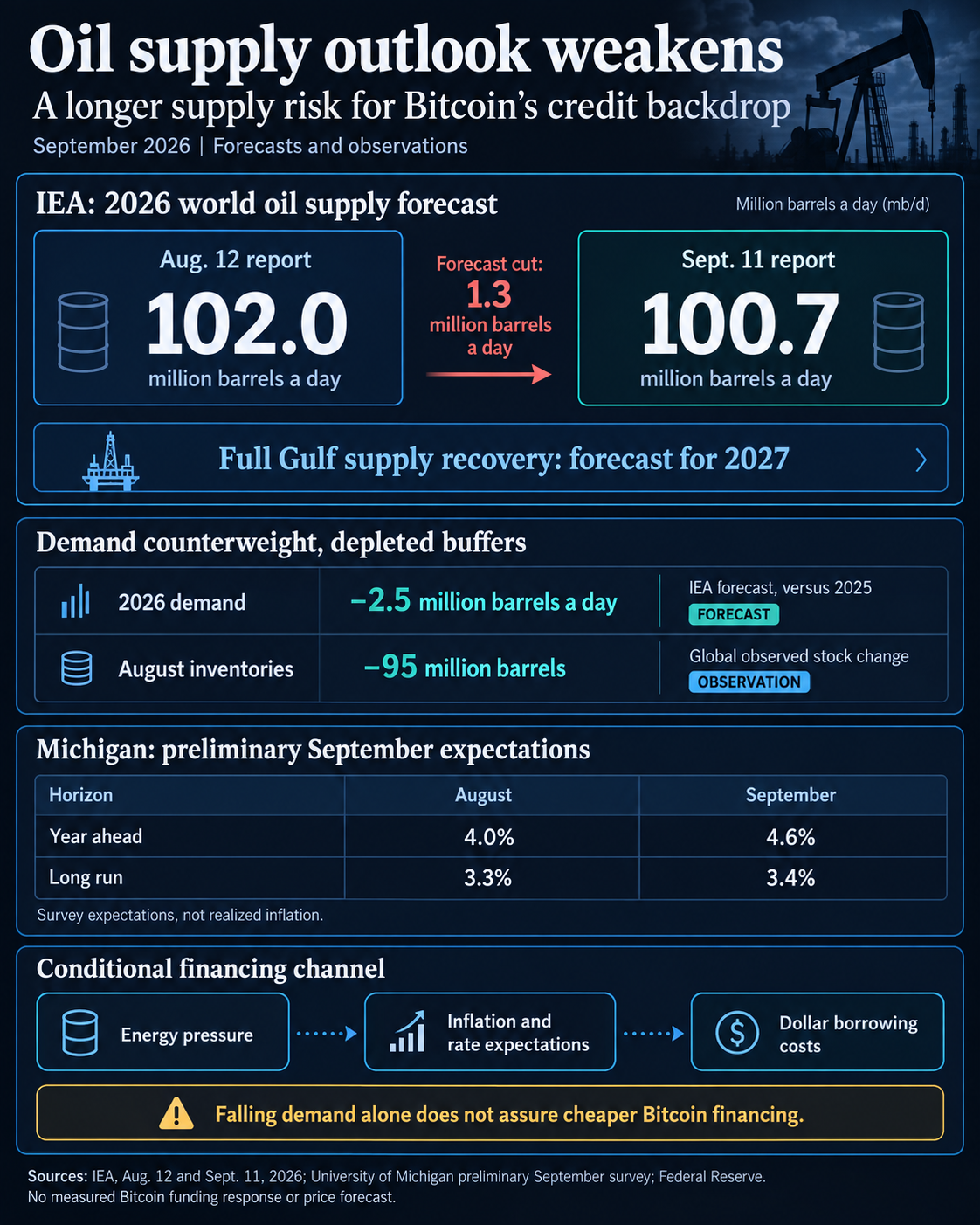
Its Sept. 11 report projects average global supply of 100.7 million barrels a day this year, down from 102 million in the Aug. 12 outlook. The downward revision is 1.3 million barrels a day.
Demand is weakening too. The IEA forecasts global oil consumption will fall by 2.5 million barrels a day in 2026 compared with 2025. It puts that contraction at about 940,000 barrels a day deeper than it expected in August.
Less consumption could ease pressure on scarce supplies. Yet the agency estimates global observed inventories fell by 95 million barrels in August, indicating that weaker use has not removed physical tightness.
There is some relief in flows: the IEA says increased volumes bypassing the Strait of Hormuz and military-escorted shipments through it helped narrow crude export losses. But Gulf refined-product and liquefied petroleum gas exports in August remained nearly 60% below February. Recovery is uneven, and the 2027 timetable remains a forecast.
The inflation test for cheaper credit
For investors borrowing dollars to hold Bitcoin, the relevant link runs through inflation and expected interest rates. If persistent energy pressure keeps those expectations higher, financing relief could take longer. That risk concerns borrowers exposed to broader credit conditions; the reports do not measure changes in Bitcoin borrowing costs.
The Fed’s explanation of monetary policy describes how short-term rates influence lending costs and how expectations of future policy can affect longer-term rates and credit terms.
The University of Michigan’s preliminary September survey adds a warning signal: year-ahead inflation expectations rose to 4.6% from 4.0% in August. Long-run expectations moved to 3.4% from 3.3%. The smaller long-run move warrants attention, but one preliminary reading does not establish a lasting shift in expectations.
An earlier assessment offered a counterweight. In his Sept. 3 speech, Fed Governor Christopher Waller said his concern about energy costs spreading into many goods and services prices had not materialized so far.
Waller identified renewed energy pressure and rising longer-term expectations as risks. He said he could support holding rates if disinflation continued, but would consider a hike if August inflation reversed that progress. Those were his conditional views before the IEA release.
Ahead of the Sept. 15–16 Fed meeting, the test for cheaper credit is whether weaker consumption and recovering flows translate into less inflation pressure. Sustained supply recovery and limited spillovers would strengthen that case; persistent price pressure would weaken it. Falling oil demand alone offers Bitcoin borrowers no assurance of relief.
The post Bitcoin’s oil risk stretches into 2027 as IEA cuts supply outlook again appeared first on CryptoSlate.