
Circle CEO says Open USD must break USDC’s network effect before its 140 backers matter

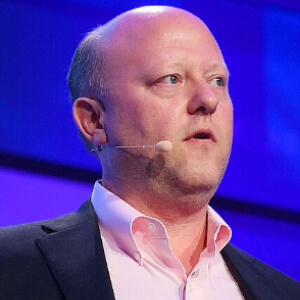
Circle CEO Jeremy Allaire used Open USD's launch to draw a harder line around USDC's moat: a partner-owned stablecoin can challenge Circle only if its distribution becomes live, regulated transaction flow.
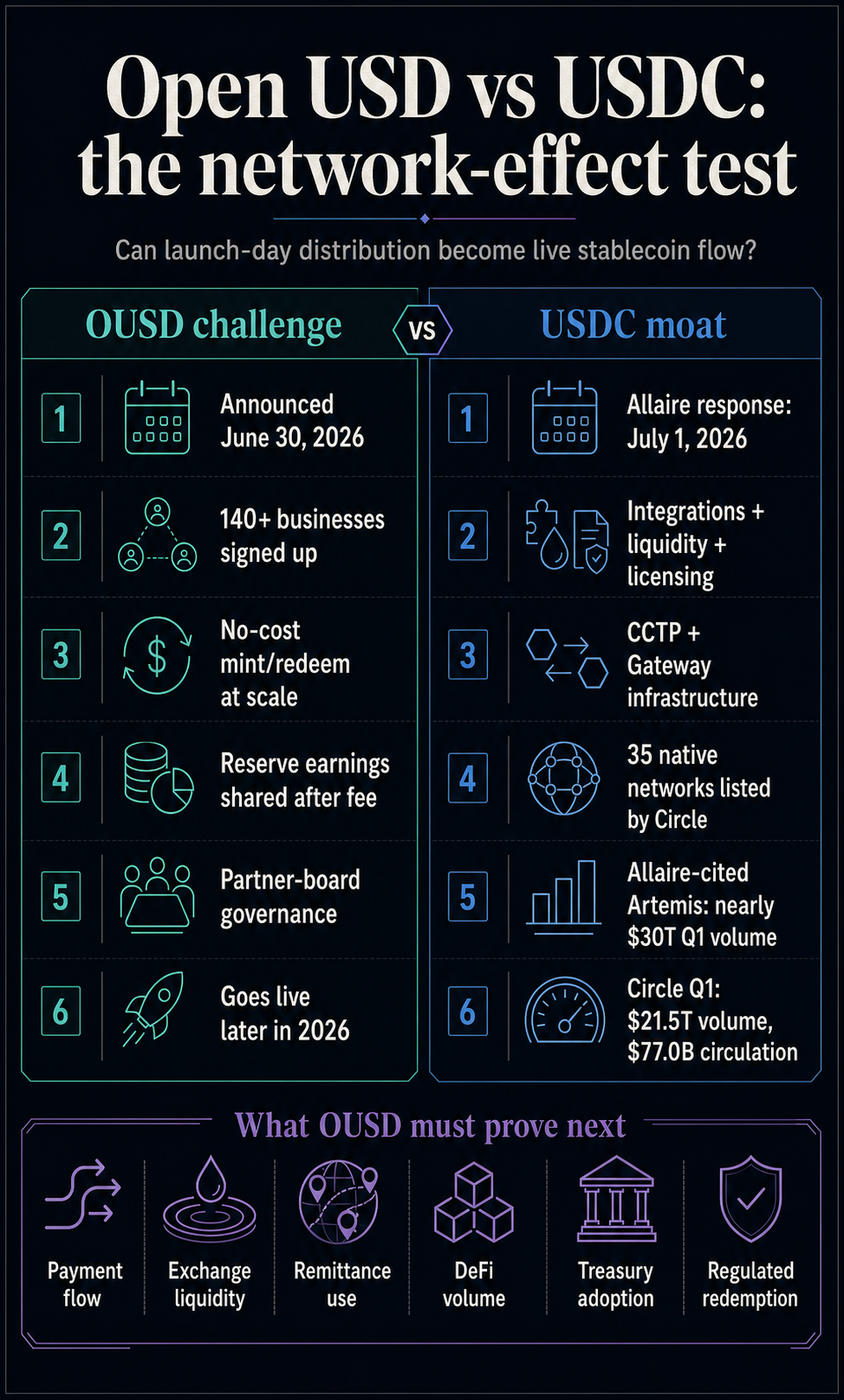
His July 1 response followed Open Standard's June 30 announcement of Open USD.
The launch post said more than 140 businesses had signed up to use the token, including Visa, Stripe, Mastercard, American Express, Coinbase, BlackRock, BNY, Google, Shopify, Solana, Base, Ripple and Fireblocks.
Open Standard said OUSD would offer no-cost minting and redemption at scale, send reserve earnings to partners after a management fee, and operate through an independent board made up of partners.

The roster gives OUSD credible distribution. Allaire's challenge is whether that distribution can become liquidity, regulated availability and repeat usage before USDC's incumbent rails absorb the demand.
USDC's moat is measured in flow
In his response, Allaire framed stablecoins as internet platform businesses that tend toward winner-take-most outcomes because liquidity, integrations, and regulatory access compound over time. He pointed to USDC's integrations, liquidity, licensing footprint, CCTP, and Gateway as the infrastructure that makes USDC easier for developers and institutions to continue using.
Allaire said,
Stablecoin networks are platform and network effect businesses that are established over a long period of time, tend towards winner take most market structures, and resemble other internet platform utility markets. Establishing these liquidity network effects also involves building global regulatory infrastructure and ensuring that the stablecoin is available under various regimes around the world.

Circle's own materials list native USDC support on 35 networks and cite its MiCA compliance and licensing disclosures, reinforcing that the incumbent's moat is operational as well as brand-driven.

USDC's volume lead is large across several cuts, even though the measurement varies. Allaire cited Artemis data indicating USDC handled nearly $30 trillion in on-chain transactions in Q1 2026 and accounted for about 80% of dollar stablecoin blockchain transaction volume.
Circle's May 11 Q1 release separately reported $21.5 trillion in USDC on-chain transaction volume, $77.0 billion in USDC in circulation, and a 63% share of stablecoin transaction volume under Visa Onchain Analytics.
USDC also accounted for 80% of total stablecoin transaction volume in a CEX.IO Q1 stablecoin report, which found that bot-driven activity accounted for 76% of total stablecoin volume. Those cuts point to USDC's lead in measured on-chain dollar-token flow, while Open USD is still awaiting launch.
OUSD is attacking the economics around that position. Its pitch gives businesses no-cost minting and redemption at scale, shared reserve earnings and a collective governance model.


Allaire argued that those features can create redemption pressure, leave less funding for infrastructure investment, or slow decision-making within a large consortium. He also pushed back on the idea that Coinbase's presence in the Open USD coalition means a break with Circle, saying the USDC partnership remains strong.
Allaire commented,
Our stablecoin partnership with Coinbase remains as strong as ever, and I think we both see that enormous opportunity ahead to expand the USDC network.
The same companies can endorse OUSD while still using USDC wherever liquidity, compliance, and customer flows are already strongest.
Open USD's next proof point is measurable usage across the partner base. After launch later this year, the token will need to demonstrate repeatable volume across multiple venues in payment, exchange, remittance, DeFi, and treasury.
Until that flow appears, Allaire's challenge stands: OUSD has distribution and incentives, while USDC has the live network effect it must displace.
Allaire concluded,
We are huge believers in growth in the stablecoin ecosystem and welcome OUSD as a new member of the community!
The post Circle CEO says Open USD must break USDC’s network effect before its 140 backers matter appeared first on CryptoSlate.