
How a PPE company’s highly publicized $32M Bitcoin strategy quietly expired without purchasing a single coin

Rectitude Holdings’ $32.625 million financing intended mainly to fund Bitcoin purchases ended without producing shares or cash, according to the Singapore safety equipment supplier’s annual report filed July 30.
The agreement was terminated on Oct. 9, 2025. That was 31 days after Rectitude publicly announced the plan, but 45 days after the company signed it on Aug. 25. Oct. 9 was also the facility’s preset outside date under the original Form 6-K.
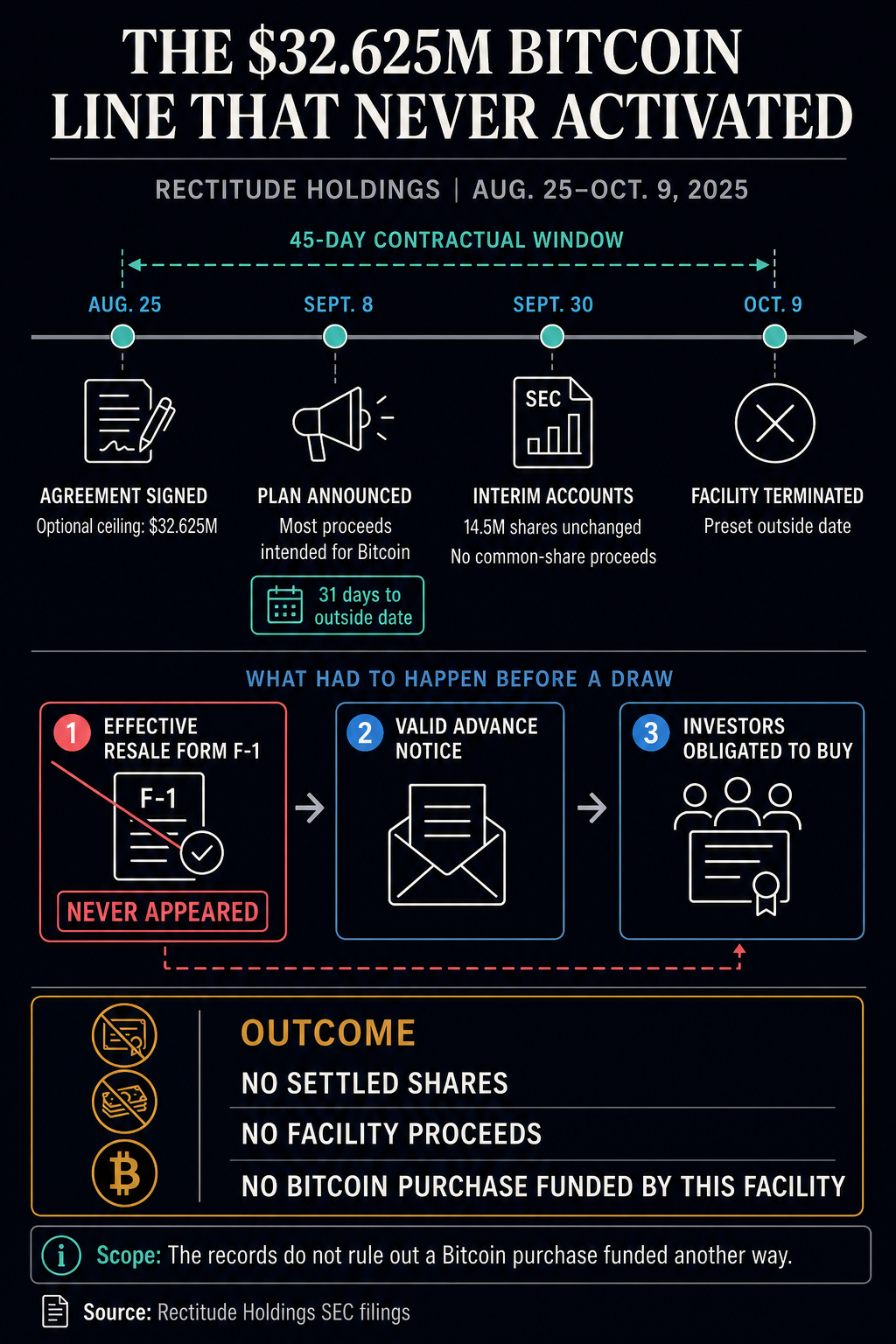
The facility gave Rectitude the option to sell shares to Constantinople Limited and Chen Zhiqiang at a 2.5% discount to a three-day pricing benchmark. Rectitude said most proceeds from any sales would fund Bitcoin purchases, with the remainder available for general corporate purposes.
The $32 million figure marked the facility’s upper limit. The cash would arrive only if Rectitude turned on the tap, and the company chose when to draw and how much. Leaving it untouched was free.

For the investors to have a purchase obligation, Rectitude first needed an effective resale registration statement on Form F-1 and then had to submit a valid advance notice. The contract made both conditions explicit. Rectitude’s SEC filing history lists no F-1, amended F-1, or effectiveness notice during the 45-day commitment window. One necessary prerequisite therefore never appeared, so the investors’ purchase obligation did not arise.
The company’s accounts corroborate that no draw was settled. Interim statements through Sept. 30 kept issued shares at 14.5 million and additional paid-in capital unchanged from March 31, while recording no proceeds from common shares.

Those interim accounts covered most of the facility’s 45 days. The audited annual statements extend through the full commitment window and the following five months, yet kept the same equity figures and again reported no common-share proceeds.
A settled advance would have exchanged newly issued Rectitude shares for cash, so the unchanged equity figures and absence of proceeds provide a second line of evidence beyond the missing registration. The annual statements also reported no Bitcoin or other digital-asset balance and no purchase cash flow for such assets.

Taken together, the registration record and the company’s accounts show that this facility produced no settled shares or proceeds and therefore did not fund a Bitcoin purchase.
The post How a PPE company’s highly publicized $32M Bitcoin strategy quietly expired without purchasing a single coin appeared first on CryptoSlate.