
US Senate advances new crypto law yet CLARITY gridlock might kill the bill for good

On Jan. 29, the Senate Agriculture Committee advanced the crypto market-structure bill, giving the legislation known as the “CLARITY Act†its first concrete win in the Senate.
The Agriculture panel’s action moves the bill closer to a full Senate fight over which regulator sets the rules for spot crypto markets.
However, the bigger near-term problem is that lawmakers are struggling to resolve an escalating fight over stablecoin “interest†and rewards.
This impasse has already led to gridlock in the banking committee, prompting the White House to intervene.

Agriculture committee moves forward on partisan lines
The Senate Agriculture Committee advanced the bill on a party-line vote of 12-11, with all Democrats on the committee withholding support, arguing that the draft lacks key guardrails.
Nonetheless, the advancement sends the package to the full Senate while signaling that bipartisan support remains a major obstacle.
Under the Agriculture Committee’s framework, the Commodity Futures Trading Commission (CFTC) would gain authority over spot crypto markets and new rulemaking power for “digital commodity†exchanges, brokers, and dealers.
This provides the kind of “rules of the road†that crypto firms have long demanded to reduce enforcement-by-litigation risk and encourage onshore expansion.
Meanwhile, Democratic lawmakers highlighted concerns for clearer provisions for decentralized finance and measures to prevent political officials from profiting from crypto ventures.
Sen. Cory Booker, the committee’s top Democrat, said the bill is close but not there yet. He described lawmakers as “almost in the red zone†while warning that bipartisan input hasn't been reflected in the text.
Yet, the bill's passage immediately drew reactions from high-profile industry figures who view the committee’s action as a stabilizing force, even if the work is unfinished.
Brad Garlinghouse, the CEO of Ripple, described the recent legislative push as intense. While acknowledging that the legislative process can be messy, Garlinghouse stressed that clarity is preferable to chaos and is essential for the next generation of builders integrating the technology into global finance.
Michael Selig, the CFTC Chair, characterized the vote as a fulfillment of executive promises. He noted that the committee's action builds on the President's pledge to establish the US as the “Crypto Capital of the World†and ensures that the future of financial infrastructure remains an American enterprise.
Coinbase CEO Brian Armstrong also weighed in, calling the committee vote a crucial step forward.
Notably, Armstrong singled out Senator Booker for thanks, expressing hope that the Senator would ultimately help steer a comprehensive, bipartisan version of the bill across the finish line despite the current party-line split.
From the administration’s perspective, David Sacks, the White House AI and Crypto Czar, framed the vote as a move toward establishing a necessary regulatory framework.
Sacks admitted that while the vote was partisan, several Democrats have signaled a commitment to the legislation, and the White House intends to continue working across the aisle to secure their votes.

Banking committee still stalling CLARITY Act as White House steps in
Even as the Agriculture Committee advanced its portion, the companion bill in the Senate Banking Committee has proven to be more contentious and has yet to receive a committee vote.
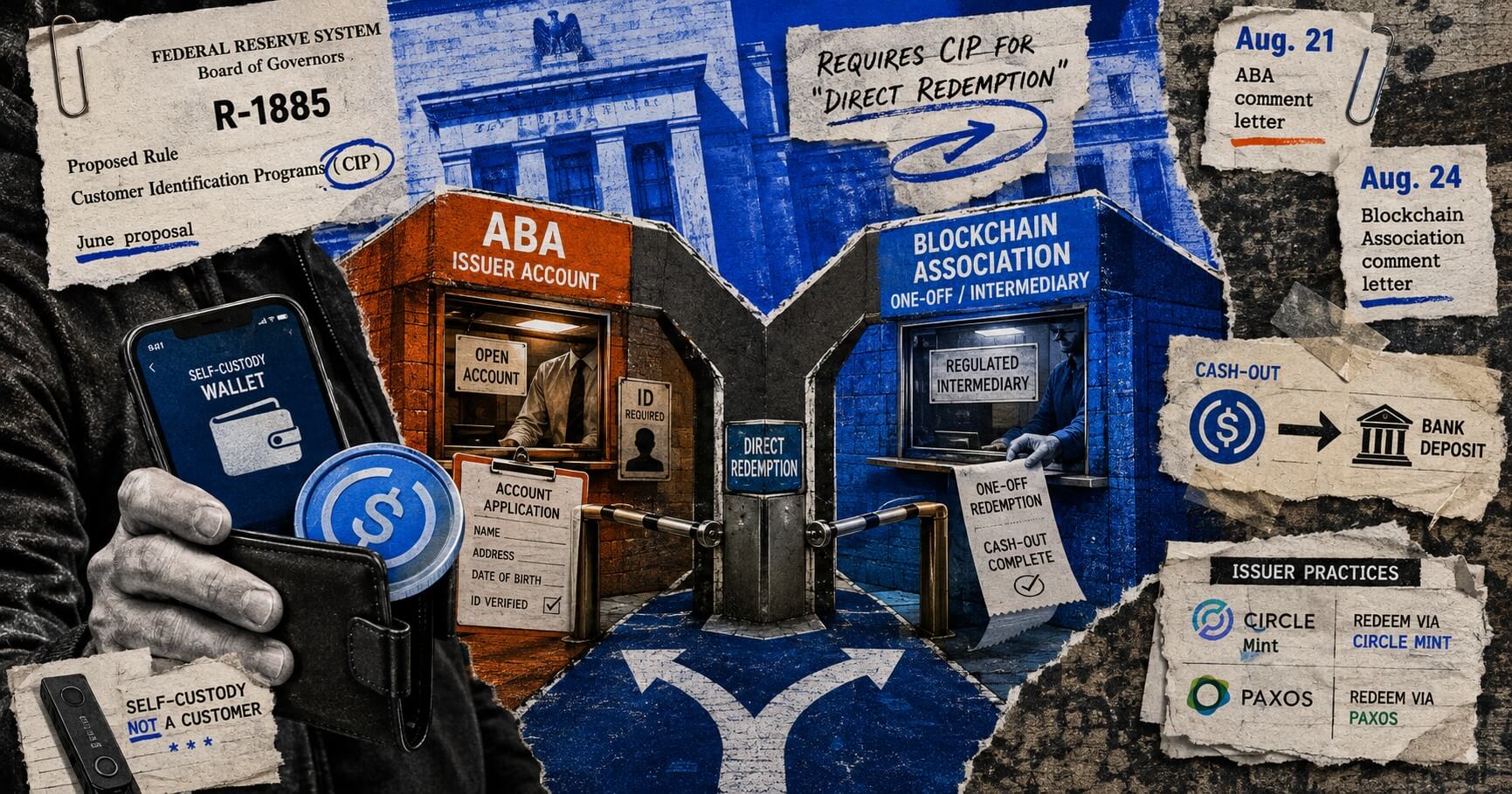
That split matters because the Banking Committee is where the most politically explosive question sits: Should crypto firms be allowed to offer interest or rewards tied to dollar-pegged stablecoins?
Banks say such incentives could pull deposits from insured institutions. Crypto firms, however, say restricting rewards would lock the industry out of basic product competition with savings accounts, money market funds, and fintech yield products.
This dispute has already been powerful enough to delay Senate action, with Coinbase pulling support for the bill.
With the committee process stalling, the White House is preparing to host a summit on Feb. 2, featuring executives from the banking and crypto industries and multiple trade groups.
The meeting, hosted by the White House’s crypto council, will focus on how the bill treats stablecoin interest and rewards.
Patrick Witt, Executive Director of the President’s Council of Advisors for Digital Assets, emphasized the geopolitical urgency of these talks. He argued that as the global financial architecture moves on-chain, the United States cannot afford to cede its leadership position.
In light of this, Witt stated that the administration would continue to engage with Senate Democrats to advance the Banking portion of the bill.
Meanwhile, Arjun Sethi, Kraken CEO, emphasized the need for a cohesive federal framework to resolve the friction. He argued:
“A clear federal framework brings activity onshore, makes expectations legible, and enables market infrastructure that can scale. That requires a registration path real businesses can use, and supervision aligned with where volume and risk concentrate. The outcome of modernization is predictable: more onshore activity, clearer standards, and a market structure that rewards transparency and real competition rather than ambiguity.â€
This intervention is critical because the market is split on the future scale of these assets. JPMorgan has argued that stablecoin growth projections in the trillions are too optimistic, cutting a prior view and forecasting that the sector will reach about $500 billion by 2028.
Conversely, Standard Chartered expects the stablecoin market cap to reach $2 trillion by the end of 2028.
Essentially, the Senate’s unresolved stablecoin-rewards language is one of the clearest levers that could push outcomes toward one side of that range.

What is next for the CLARITY Act on Capitol Hill?
The Agriculture Committee's passage of the bill is only the first hurdle, as it still faces a labyrinth of challenges before it reaches President Trump's desk.
Under Senate procedure, once a committee reports a bill, it is placed on the Senate’s Calendar of Business and becomes eligible for floor consideration. However, eligibility is not the same thing as floor time.
To bring the bill up, Senate leaders typically need a motion to proceed, which is usually debatable. Because such debates can be prolonged, leaders often file cloture motions to end them. For most matters, that means a three-fifths threshold (effectively 60 votes) in a full Senate.
That math is why Agriculture’s party-line advance is a milestone but not a breakthrough. To reach the president’s desk, the bill would need support from at least seven Democrats in the full Senate.
Chris Dixon, managing Partner at Andreessen Horowitz, acknowledged the difficulty but pointed to the inevitability of the process. He noted that while the vote lacked bipartisanship this time, the momentum is undeniable.
Meanwhile, if a Senate version passes, lawmakers would still need to reconcile it with the House’s version passed in July 2025. This sets up a conference-style negotiation or “ping-pong†amendments, another phase where stablecoin rewards and other sensitive provisions could be rewritten.
However, the process could be much easier at this stage, as House leadership has expressed a willingness to cooperate. House Committee on Agriculture Chairman Glenn “GT†Thompson said:
“After members of the Senate Banking Committee advance their legislation in the coming weeks, the House and Senate must work together to meld each of these packages into a final agreement that will unlock American innovation and development in the digital asset ecosystem.â€
Despite the procedural labyrinth, market optimism persists. Data from the crypto betting platform Polymarket indicate a 61% chance the bill will pass before the end of the year.
Matt Hougan, Bitwise CIO, outlined the binary nature of the market’s response to these next steps. He suggested that if the “Clarity Act†passes in a form the industry accepts, the market will likely rally sharply as investors price in guaranteed growth for tokenization.

However, if the legislation fails, Hougan warned that the market would enter a “wait and see†phase. In that scenario, price appreciation would depend on demonstrating real-world adoption rather than regulatory optimism.
The post US Senate advances new crypto law yet CLARITY gridlock might kill the bill for good appeared first on CryptoSlate.